No. 12
From model and site data to a place you can walk
- Context
- Personal R&D
- Year
- 2026
- Type
- Research and development
- Tools
- Revit, Houdini, Blender, USD, Unreal Engine, Python, Layer
Turning site data, GIS and building models into a model a client can walk through usually means a great deal of modeling by hand. This pipeline computes it instead, so a change is a rule and a re-run.
I designed the pipeline, decided what it should do, set the checks and judged the results. AI coding agents wrote most of the code and ran the builds under my direction. I say that plainly because directing that kind of work is the skill I want to bring to a firm.
The same pipeline produced a design study for a playground in this park: Rainbow Park playground.
I set out the idea behind this work in One database across the building life cycle.
01
What comes out
02
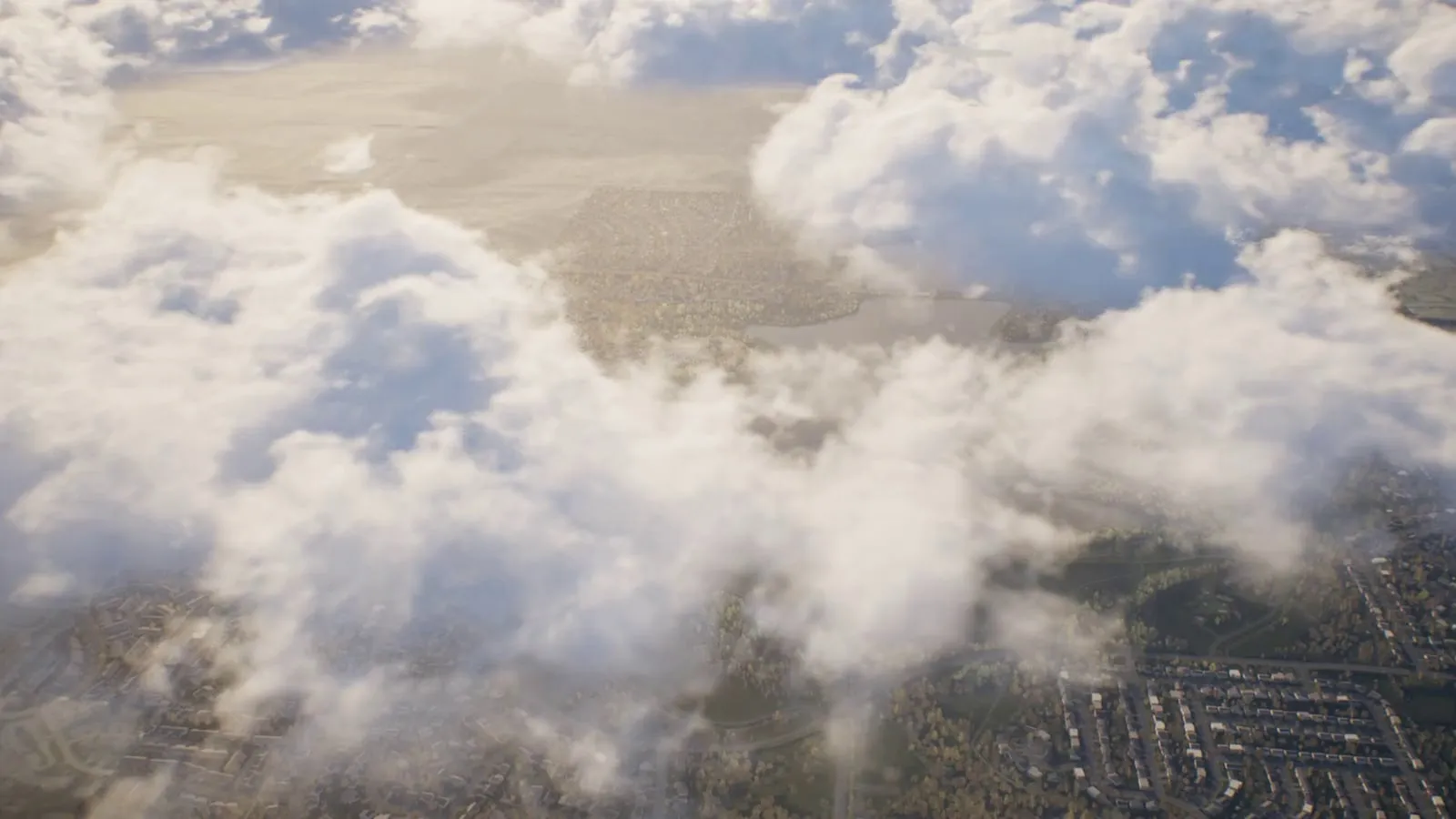
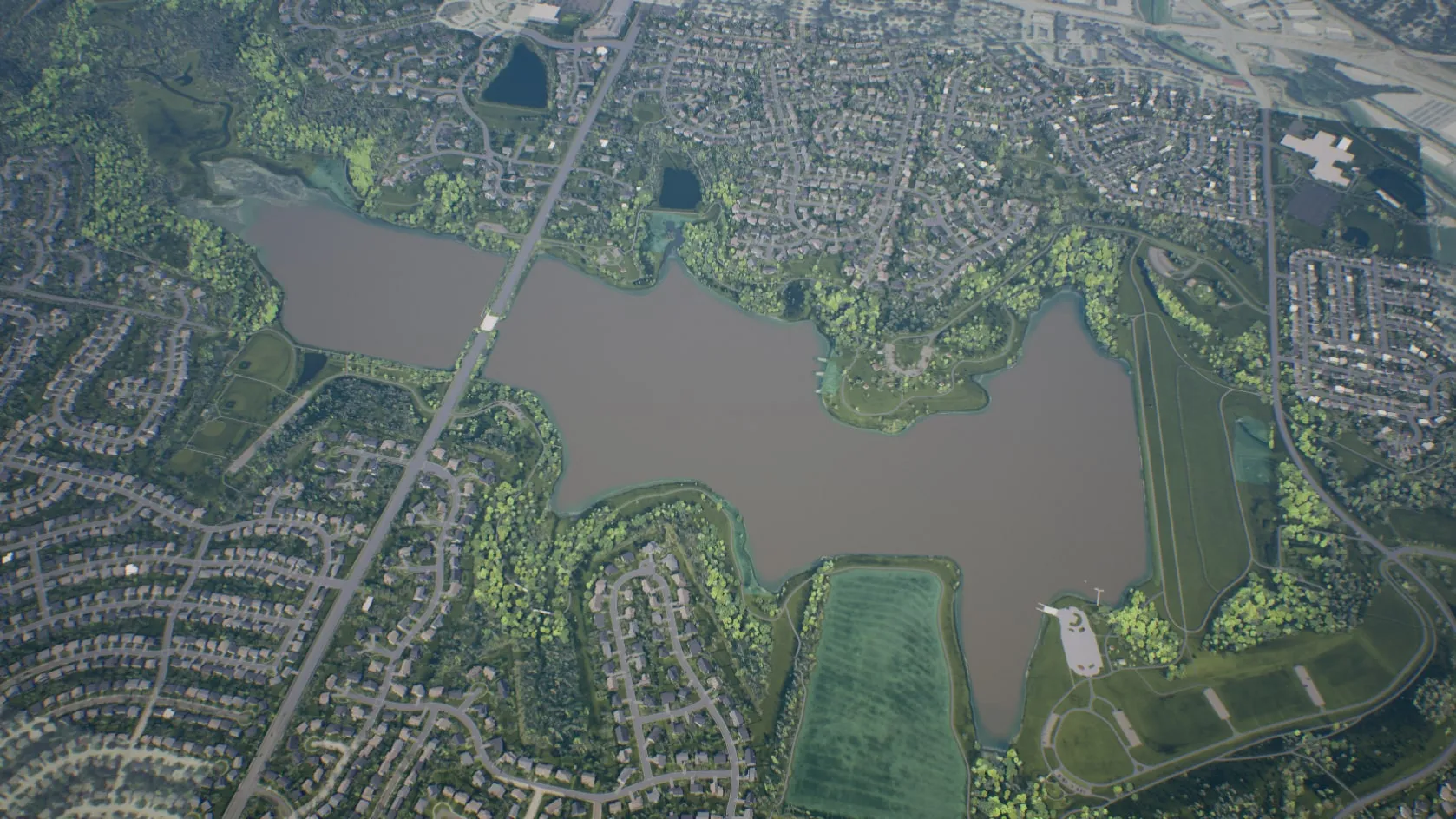
This is what the pipeline is for: a place you can look at and walk through.
02
What runs with nobody at the controls
01
03
A change is a re-run
02
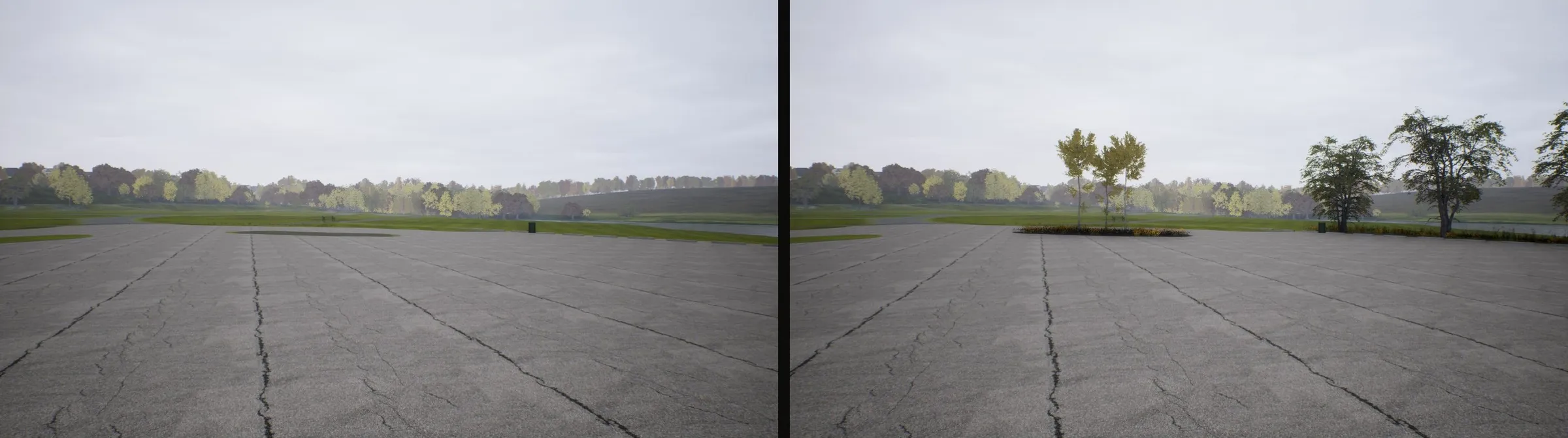
A garage rule put each garage door on the wall facing the street. On the re-run, 709 houses changed garage wall and 366 gained doors. The hub writes each building's doors into its record, and the yard plan reads those records instead of running the rule again. Over 4,768 houses there are 0 disagreements. 1,700 concrete drives and 856 walks were drawn from the doors the hub planned. A meadow outline and species weights added to the rules file took the site from 36,797 to 48,470 grass clump points in one rebuild.
04
One id, end to end
04
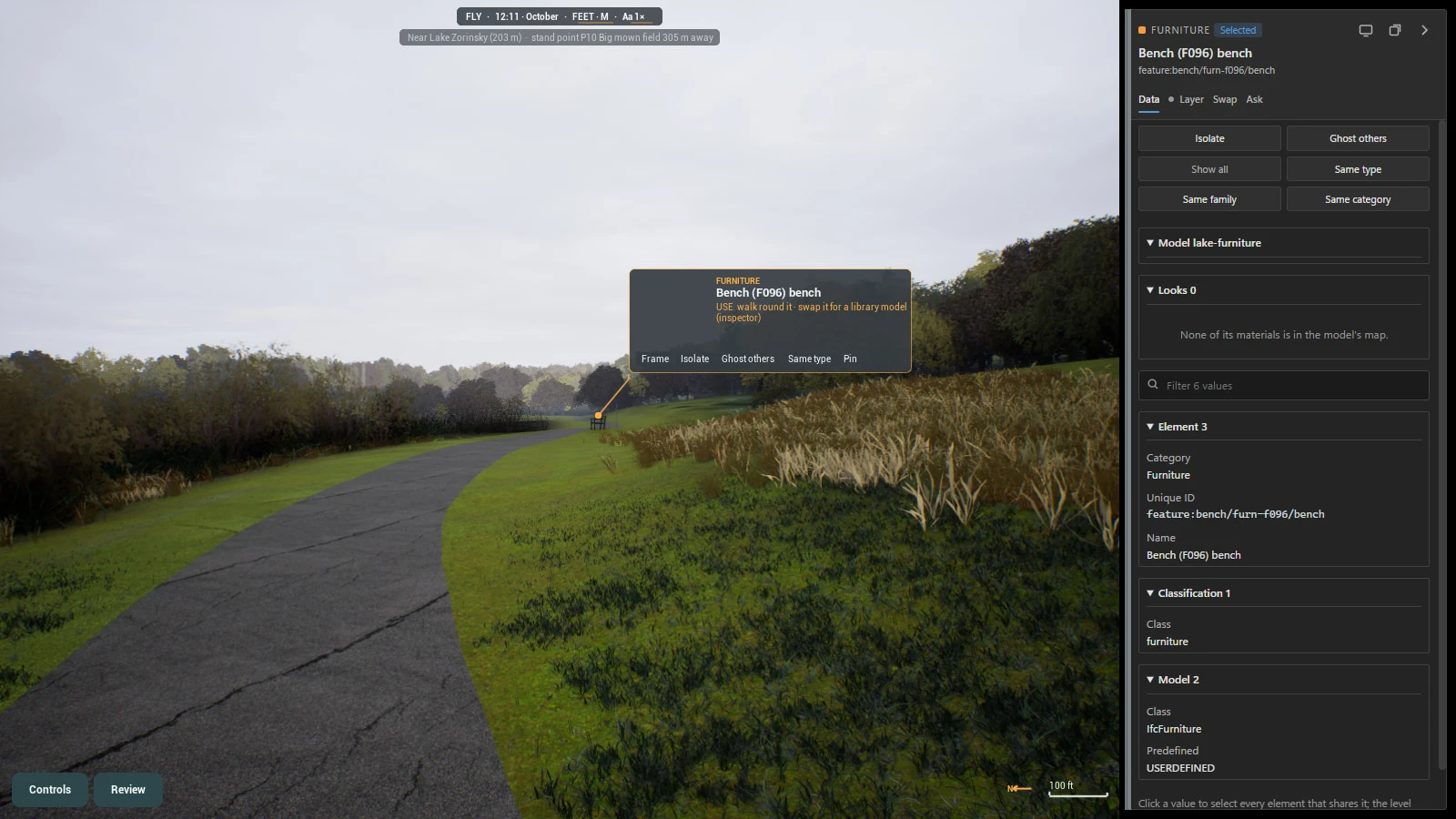
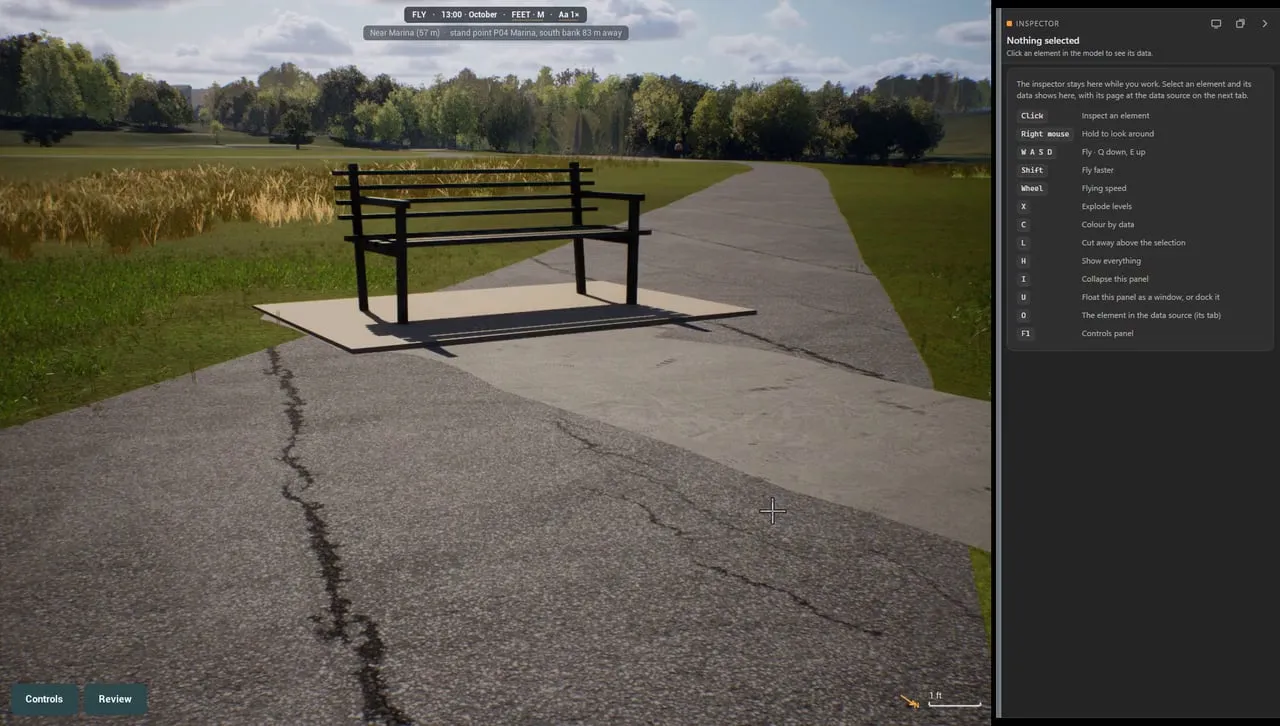
Every element keeps one id from the source file to the viewer. The id lives in an attribute, never in a name or a point number, which Houdini renumbers freely. Reading the Revit file without Revit matched all 11,959 unique ids, with geometry within 5 mm at 99.4 percent on one model and 94.7 percent on the other.
05
A place you can use
06
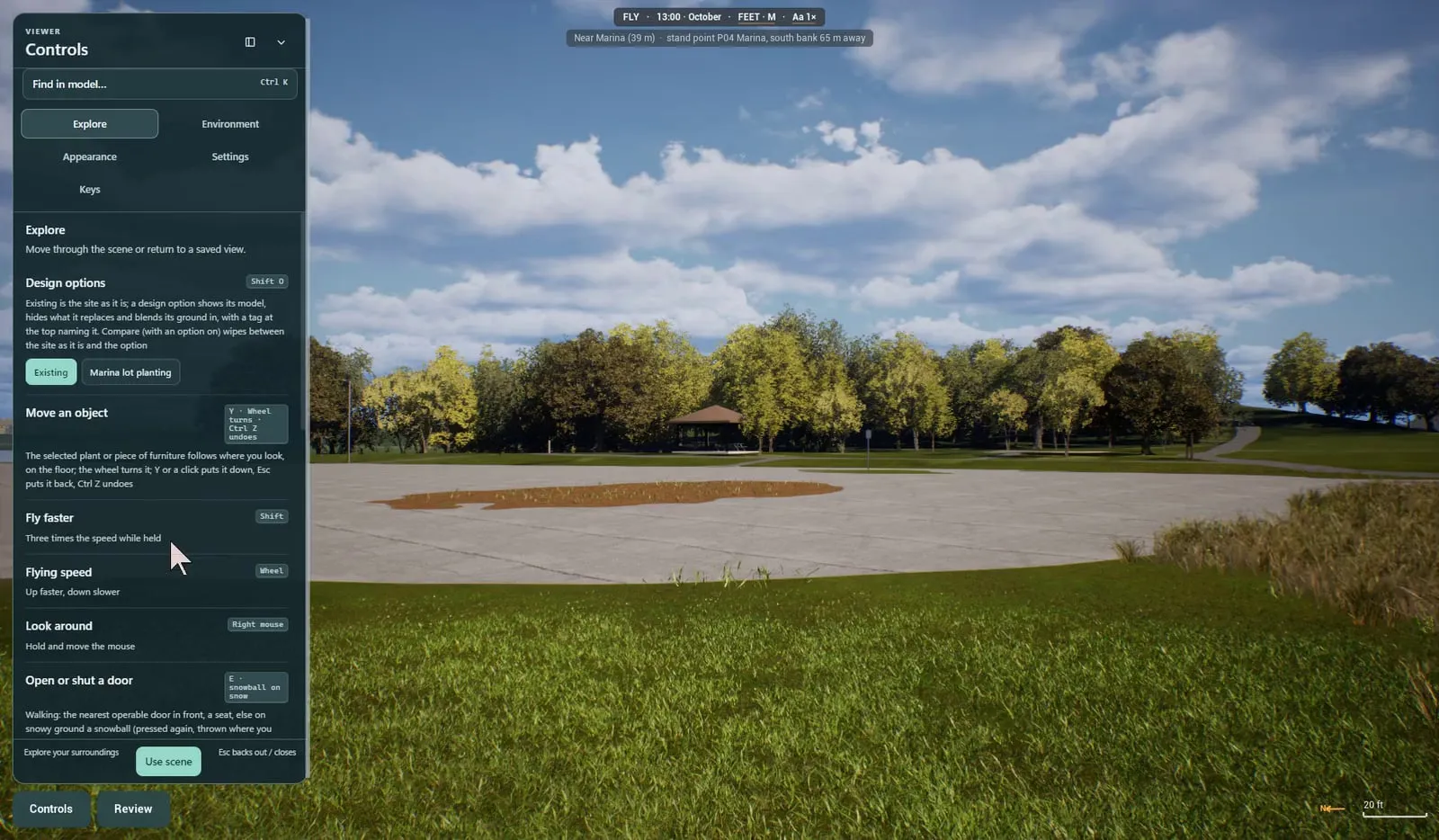
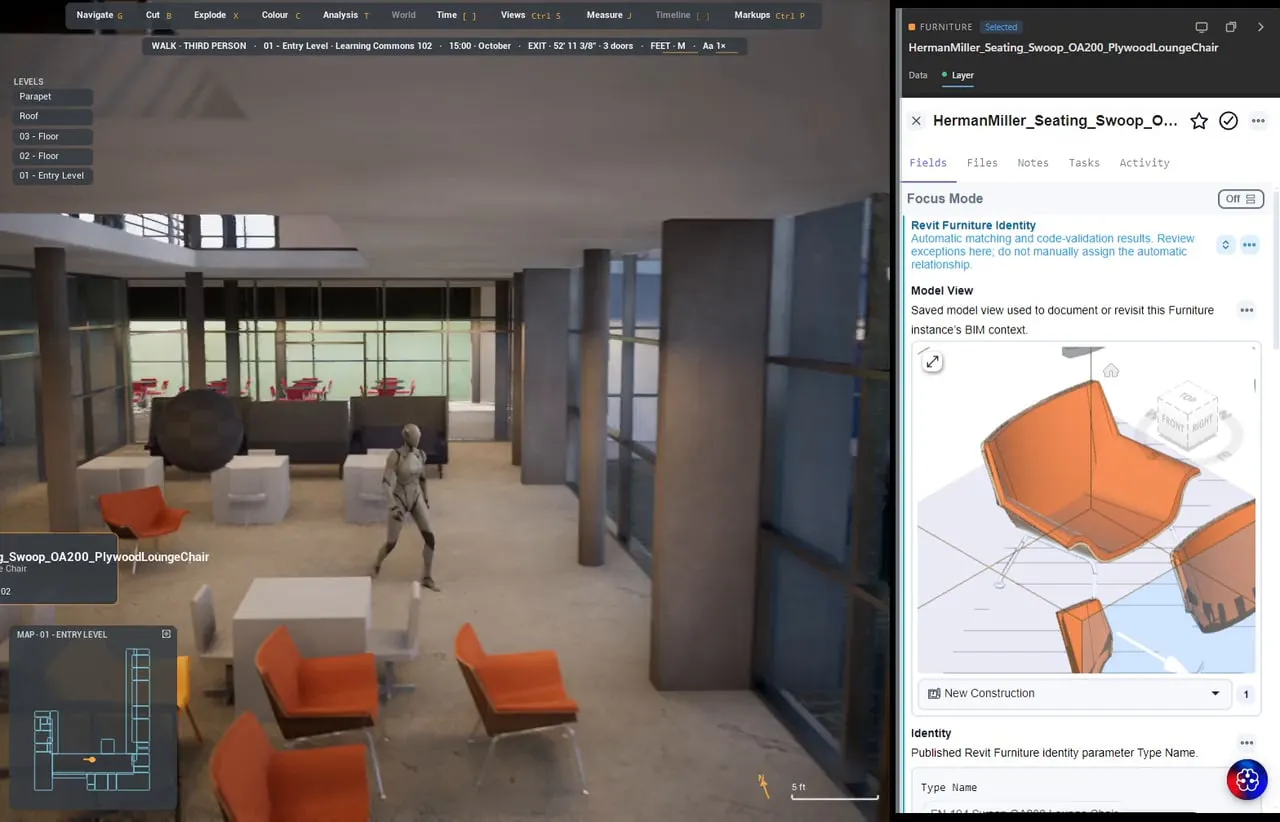
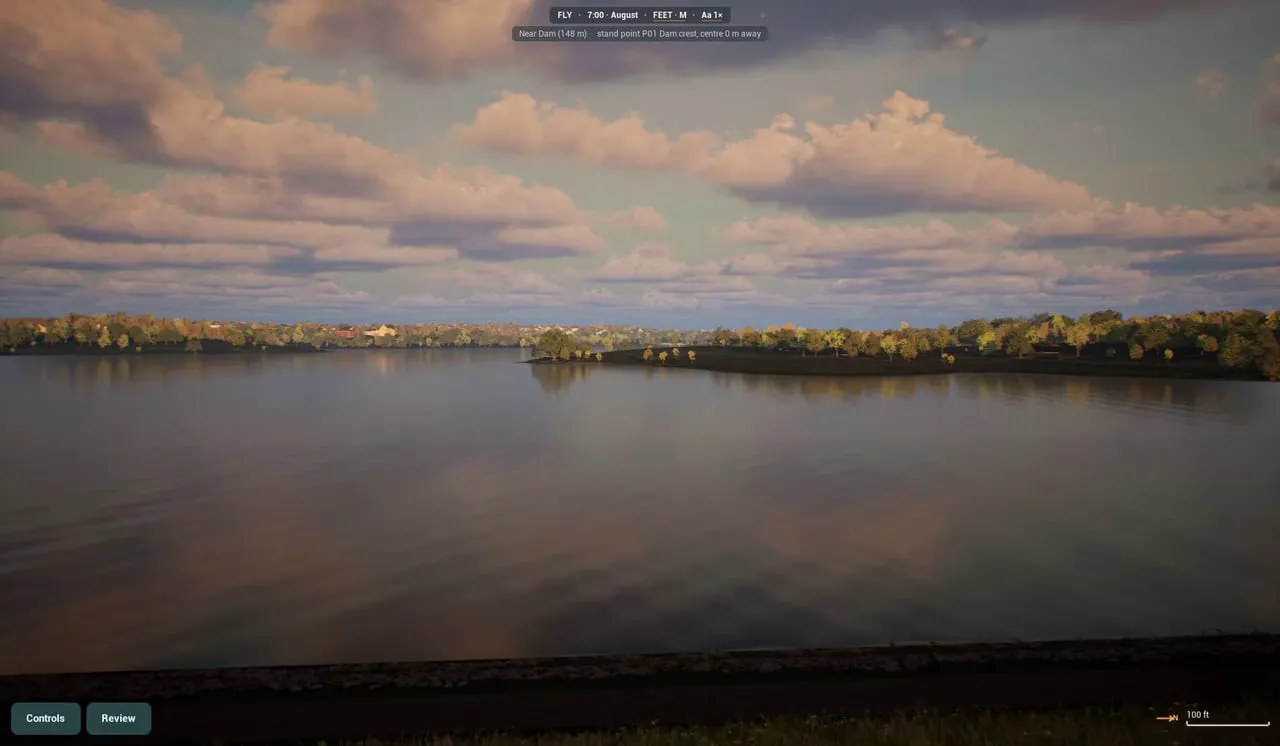
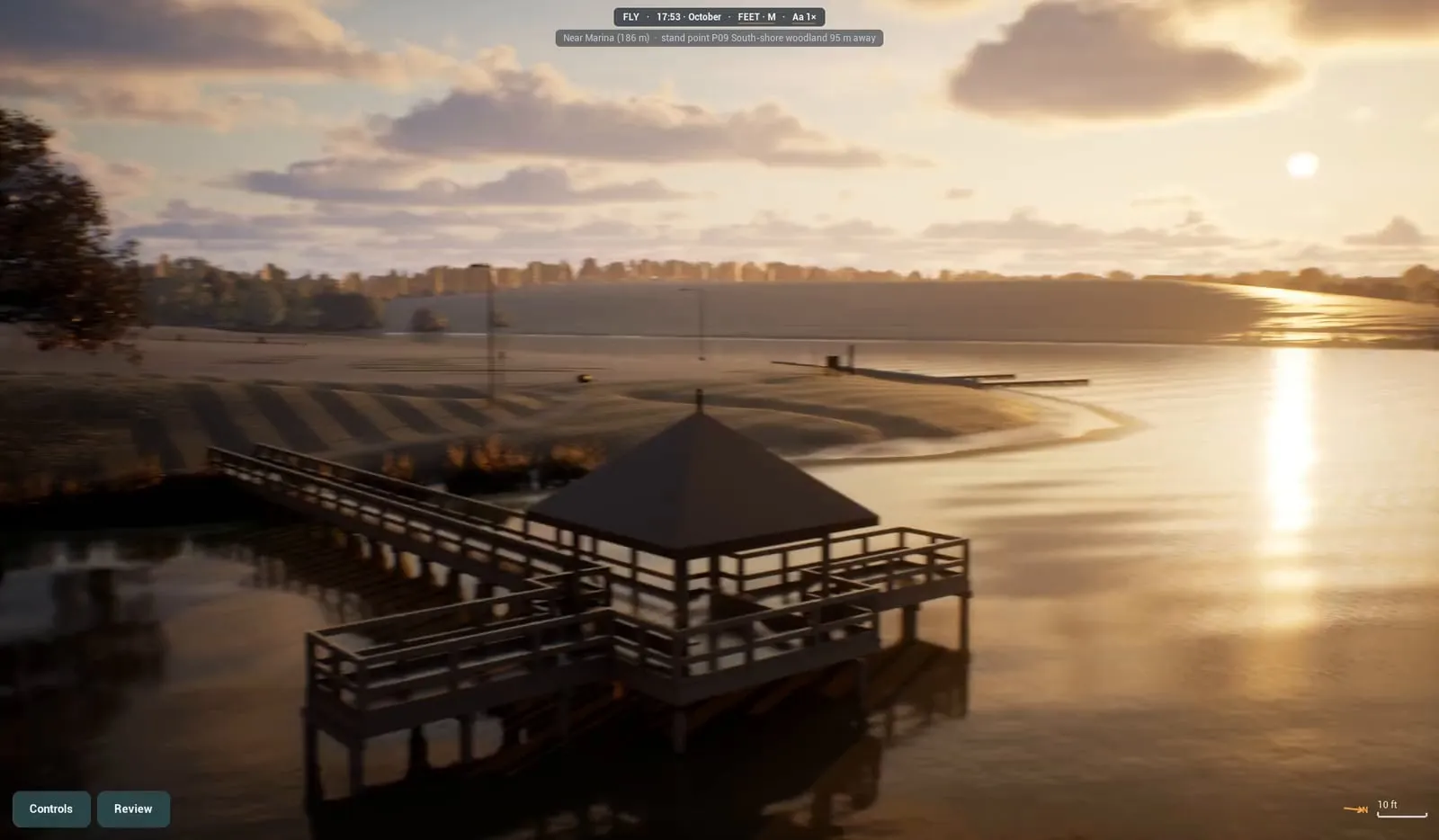
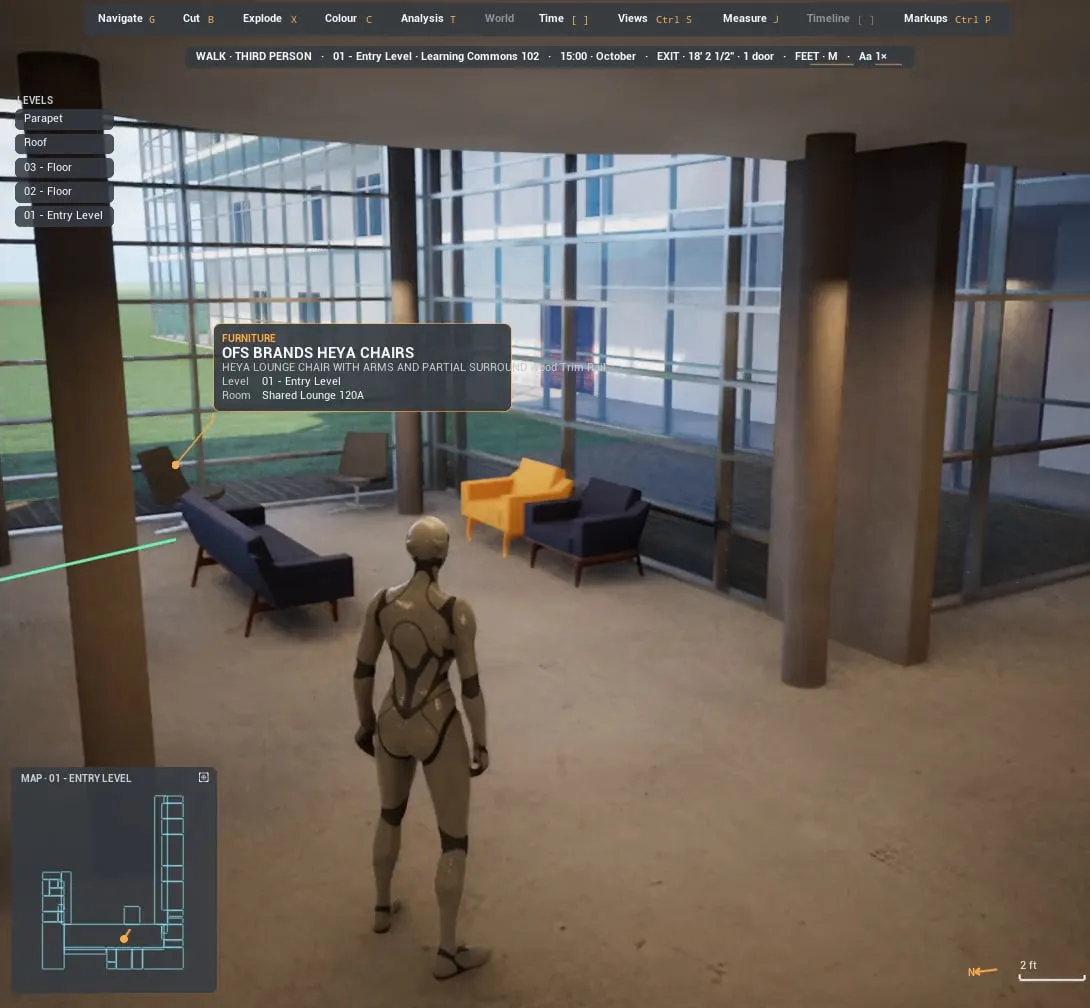
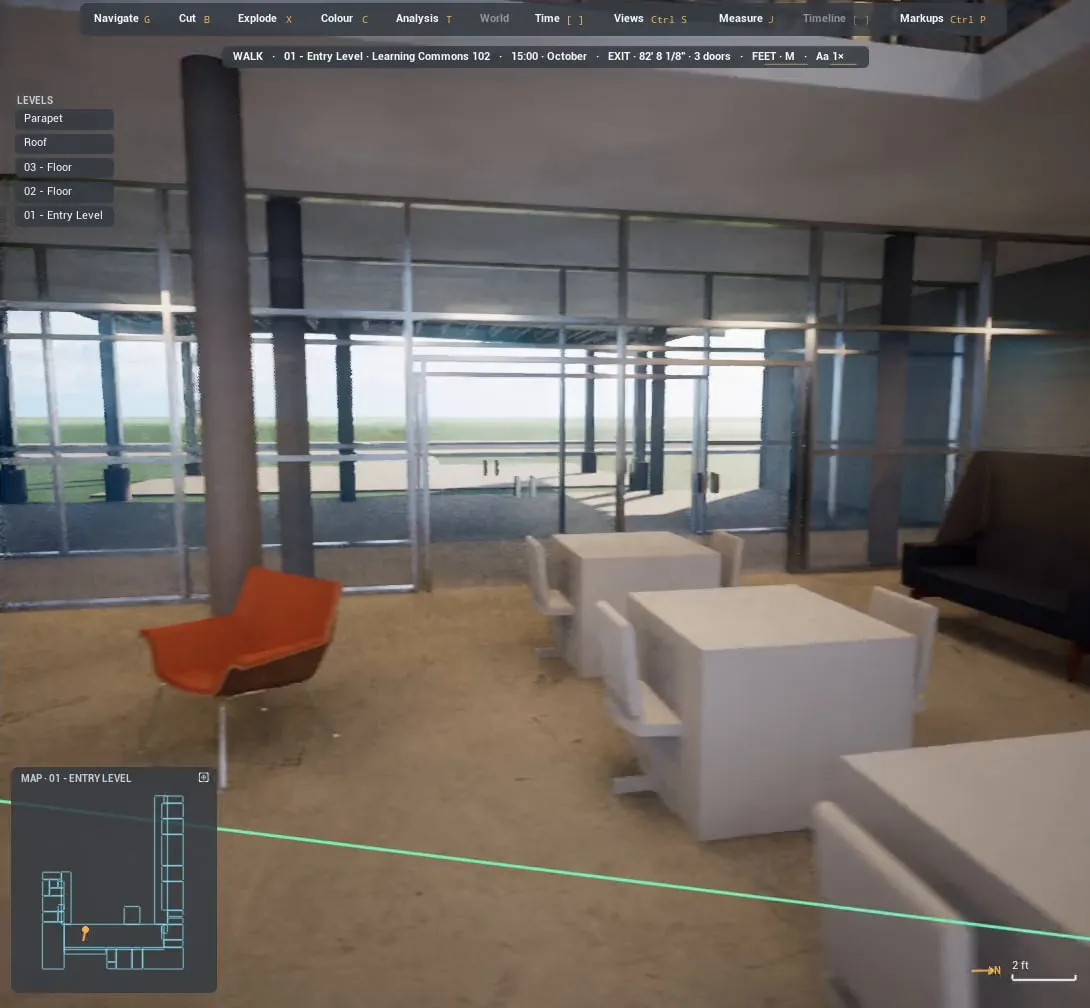
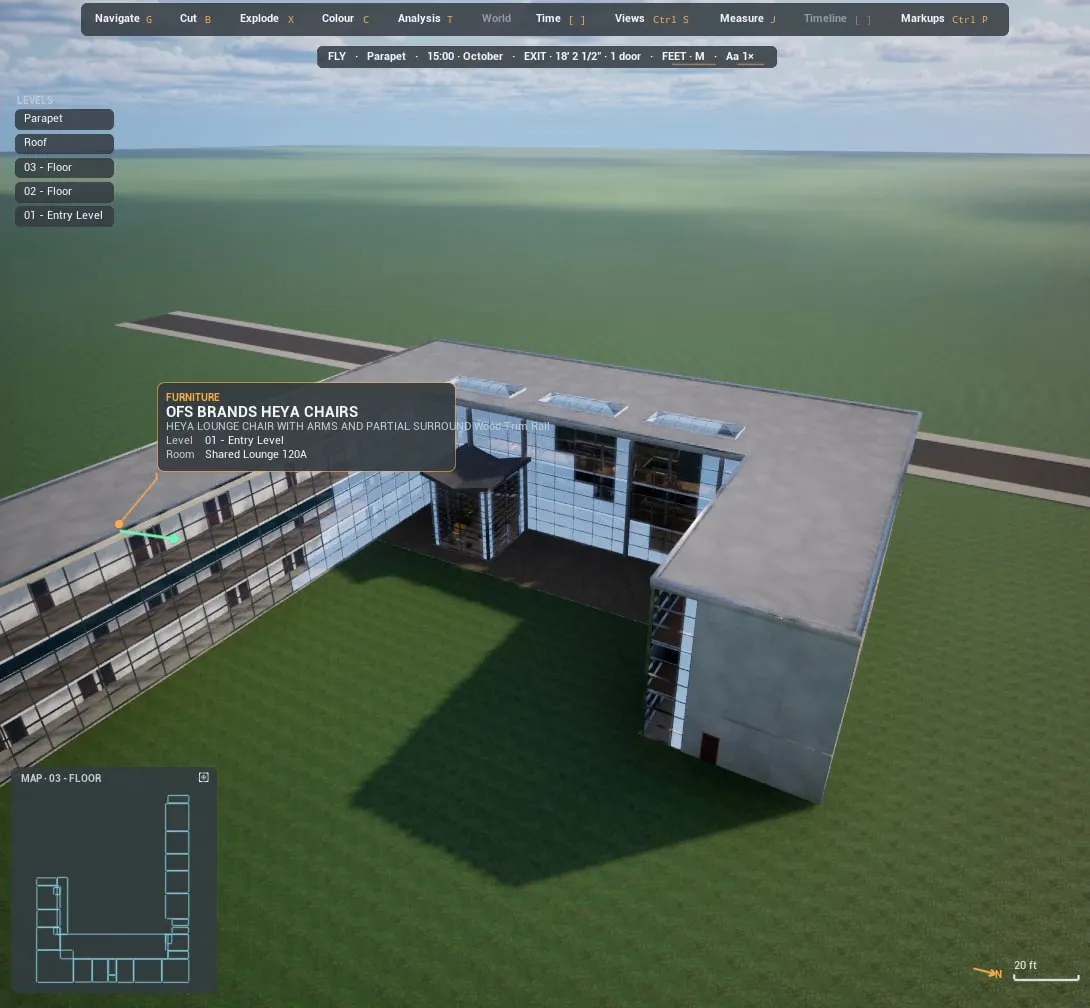
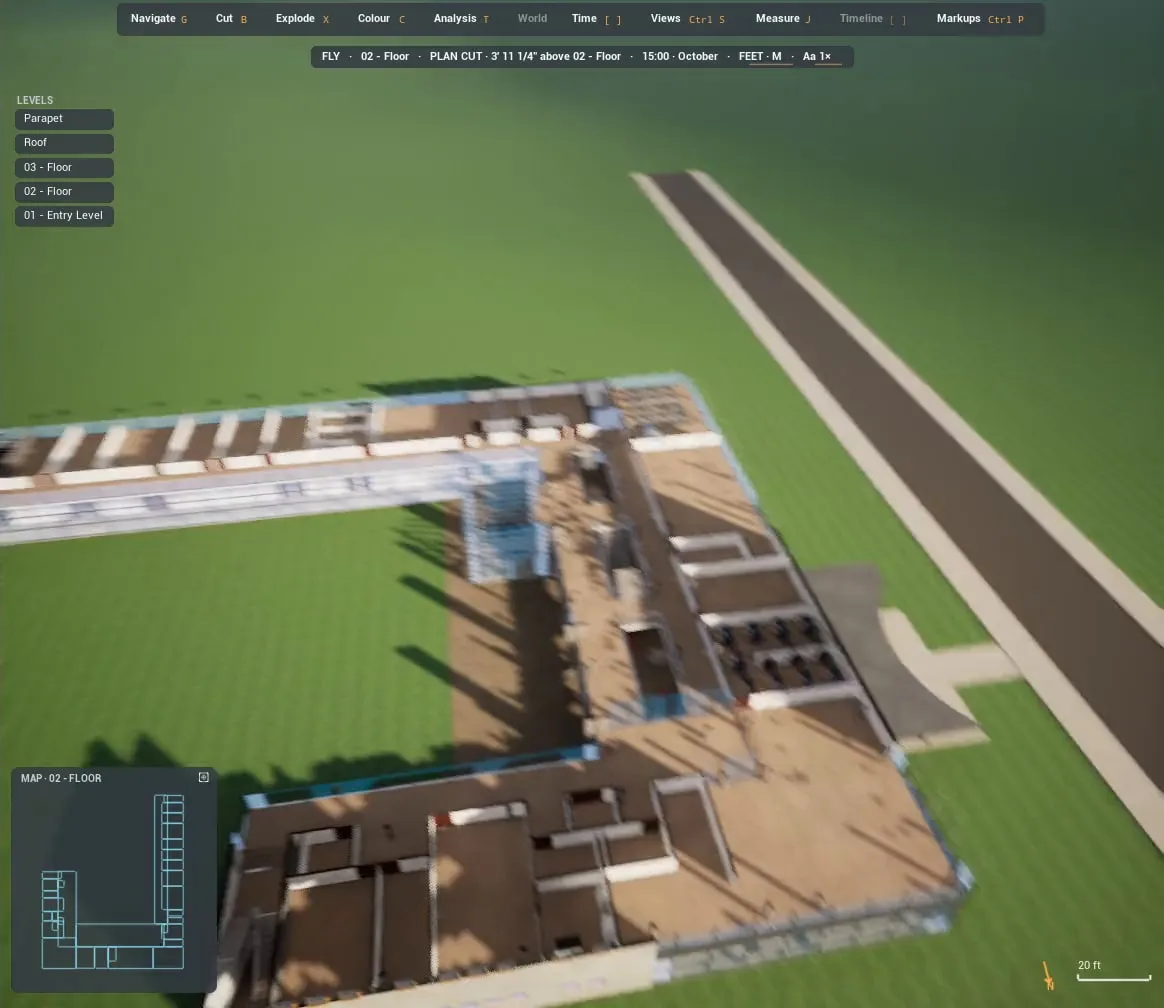
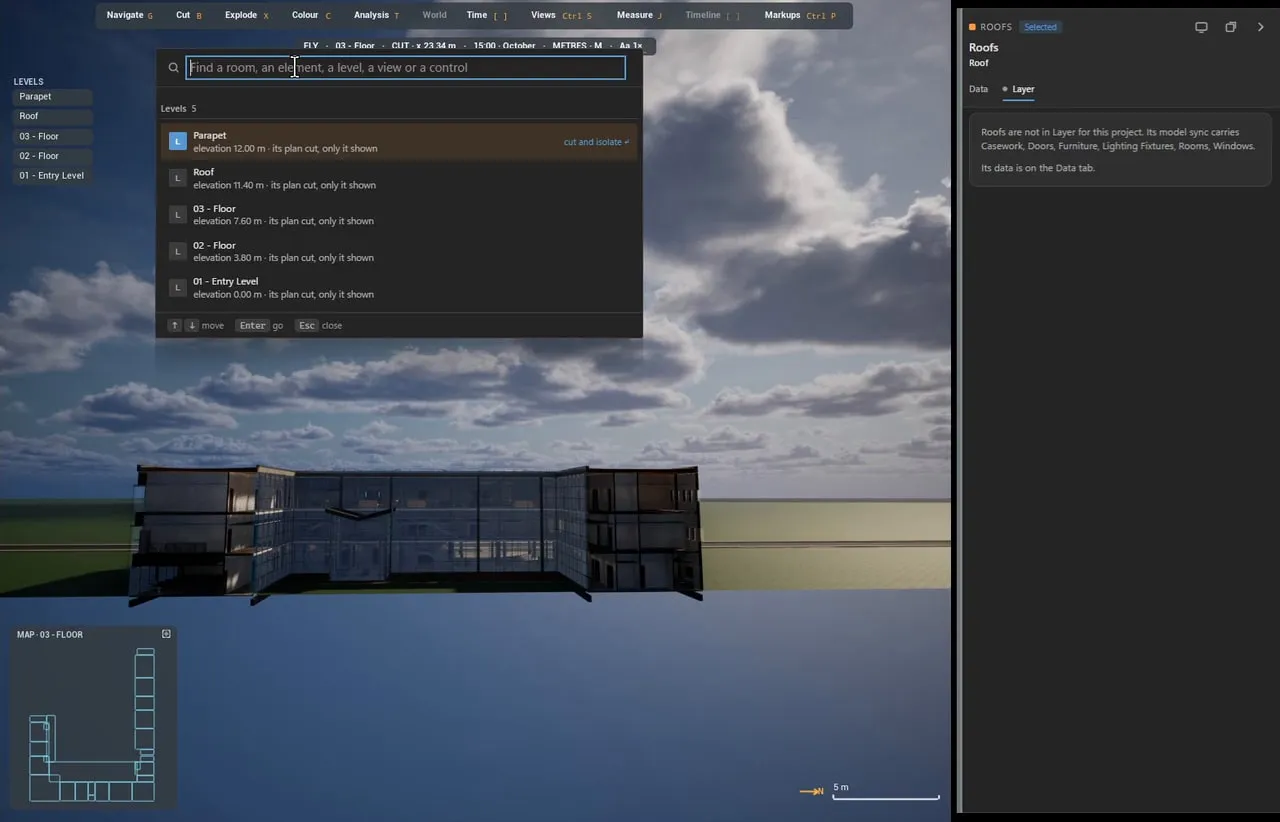
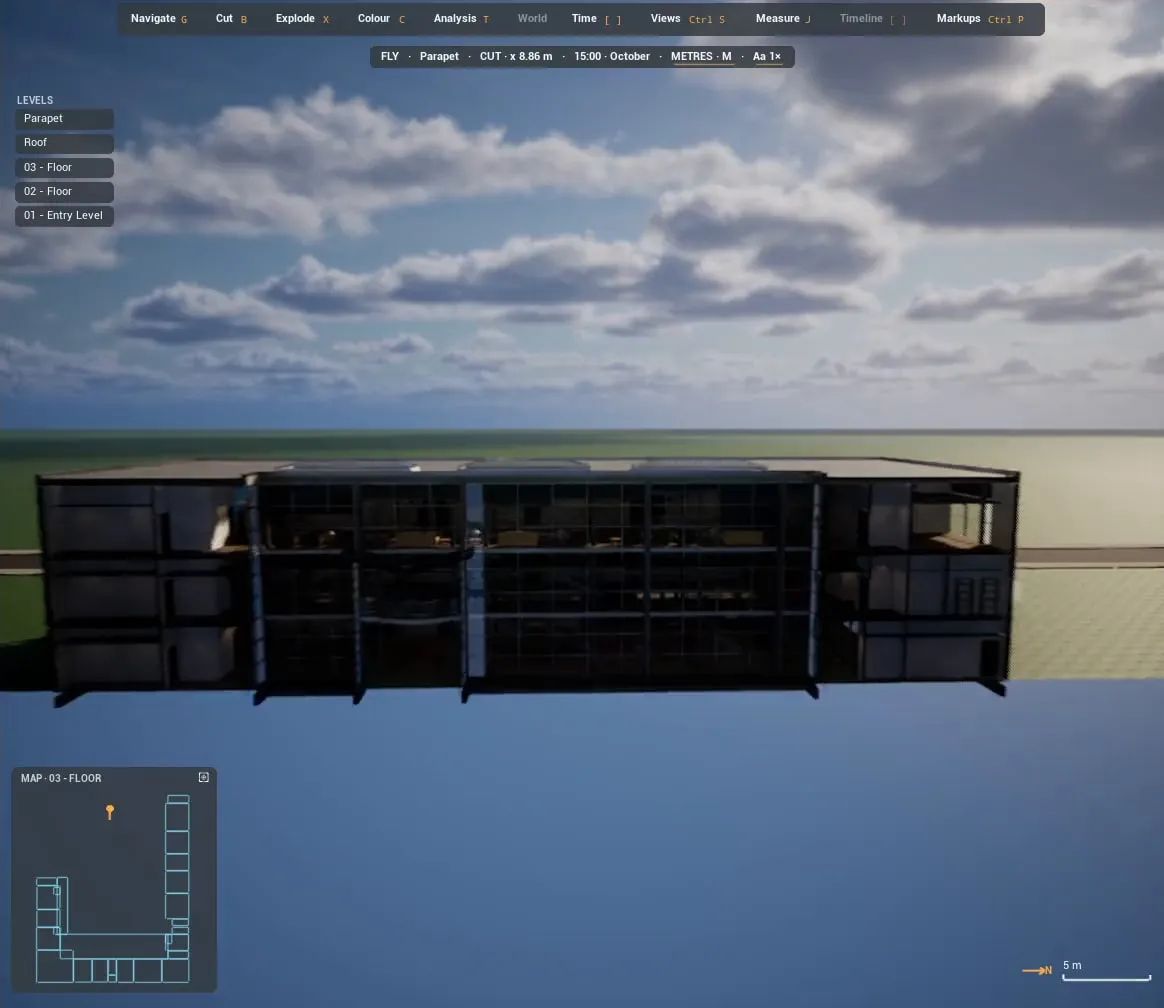
The model is not a film. You fly, walk, paddle, change the hour, the month and the weather, select things and leave notes. The interface is on screen in these clips on purpose.
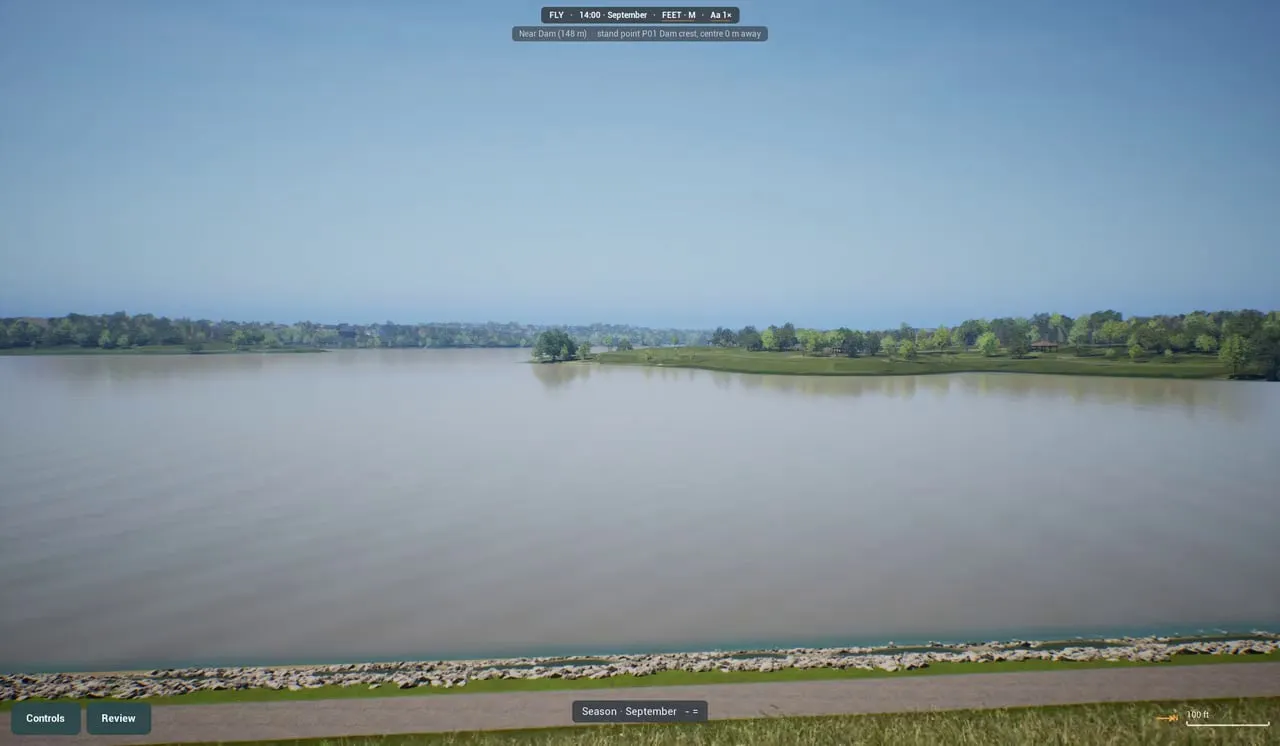
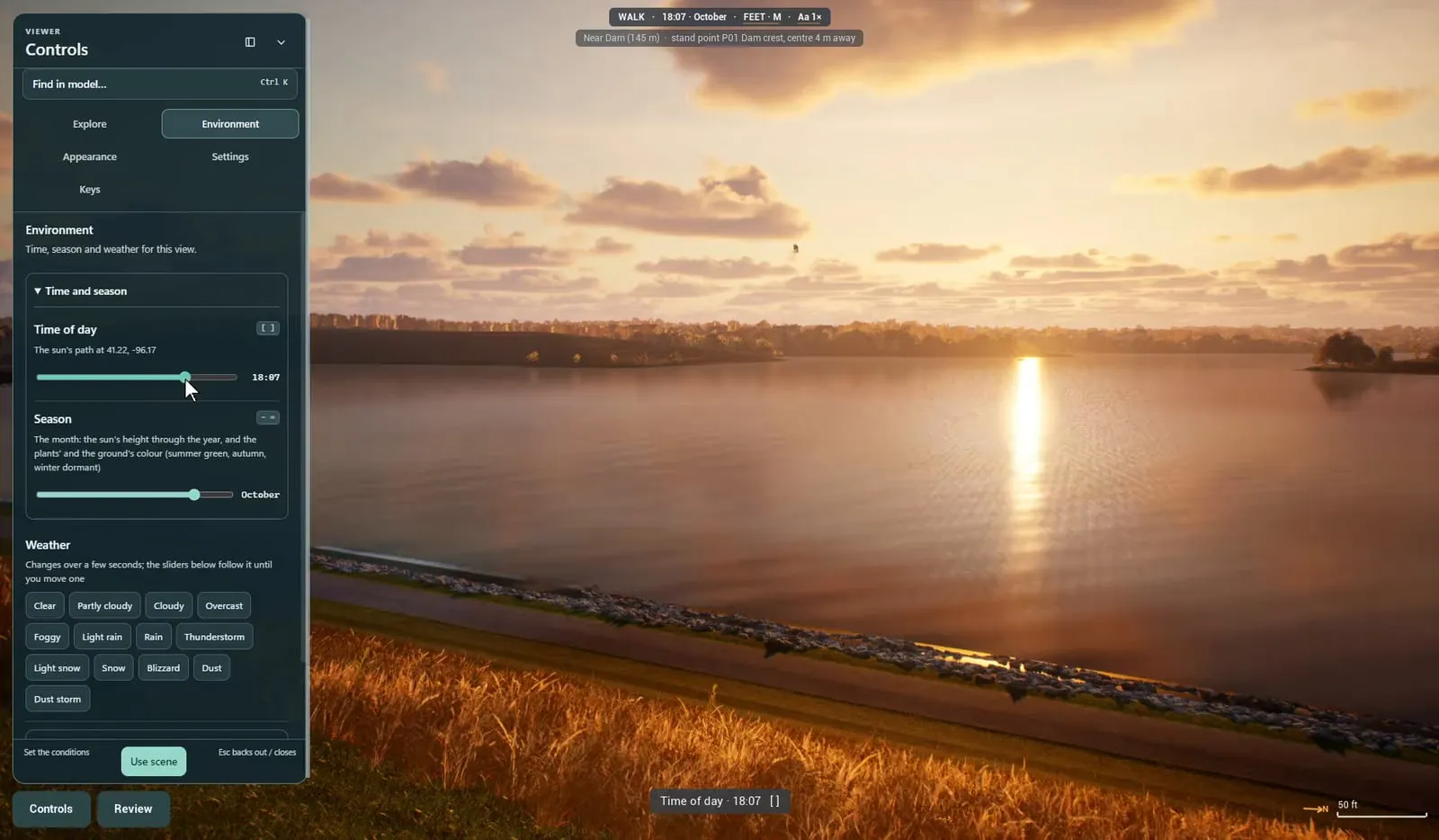
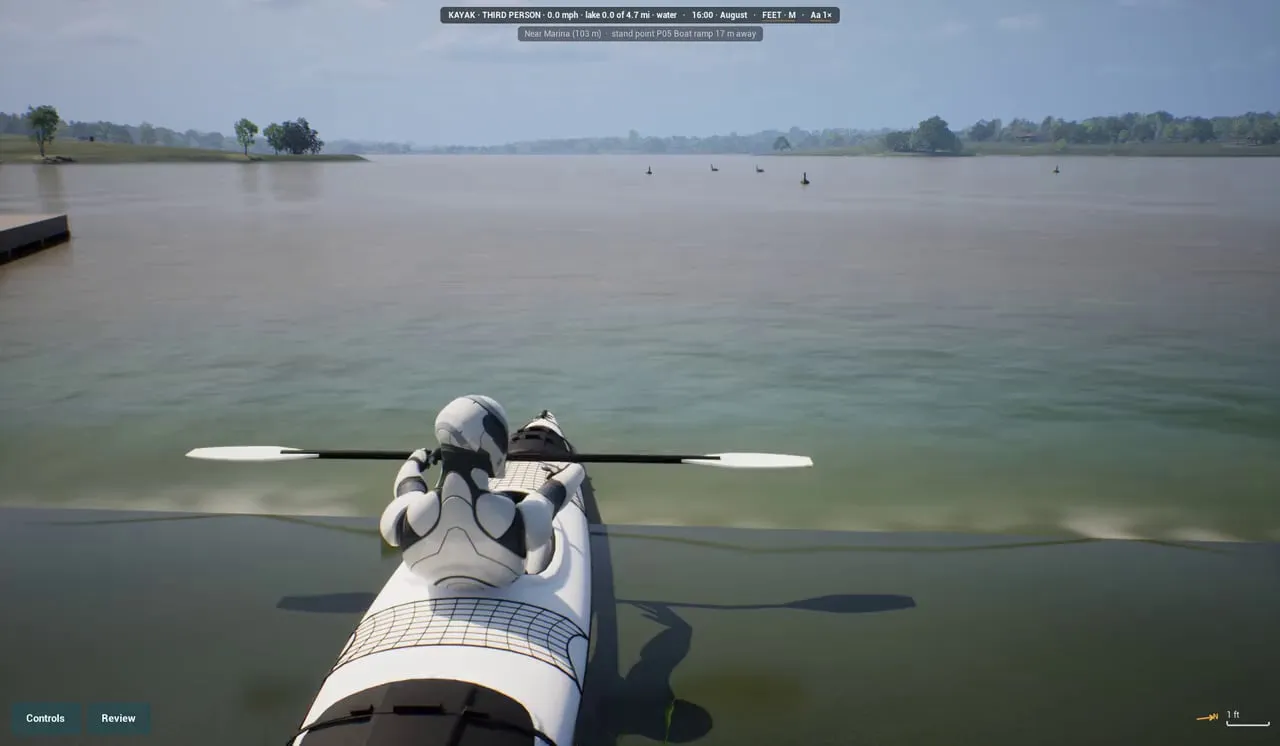
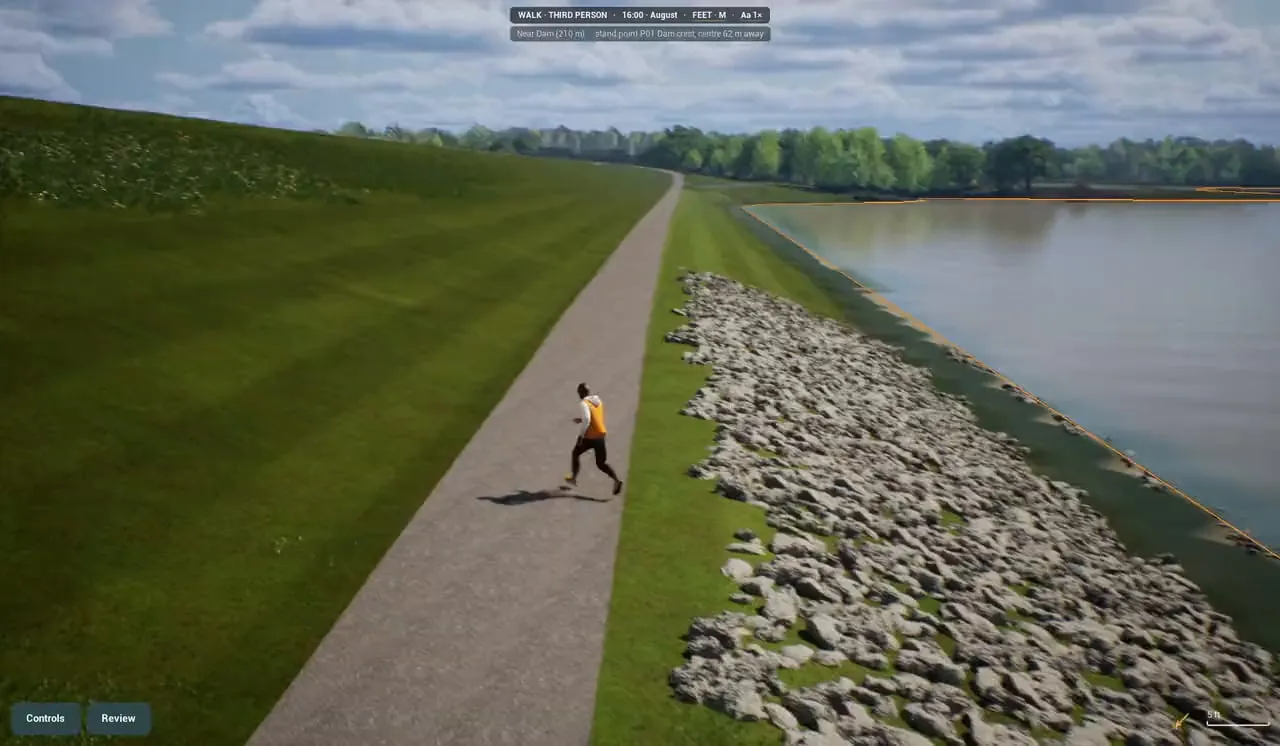
06
The school model in the viewer
06
07
Checked against the place
02
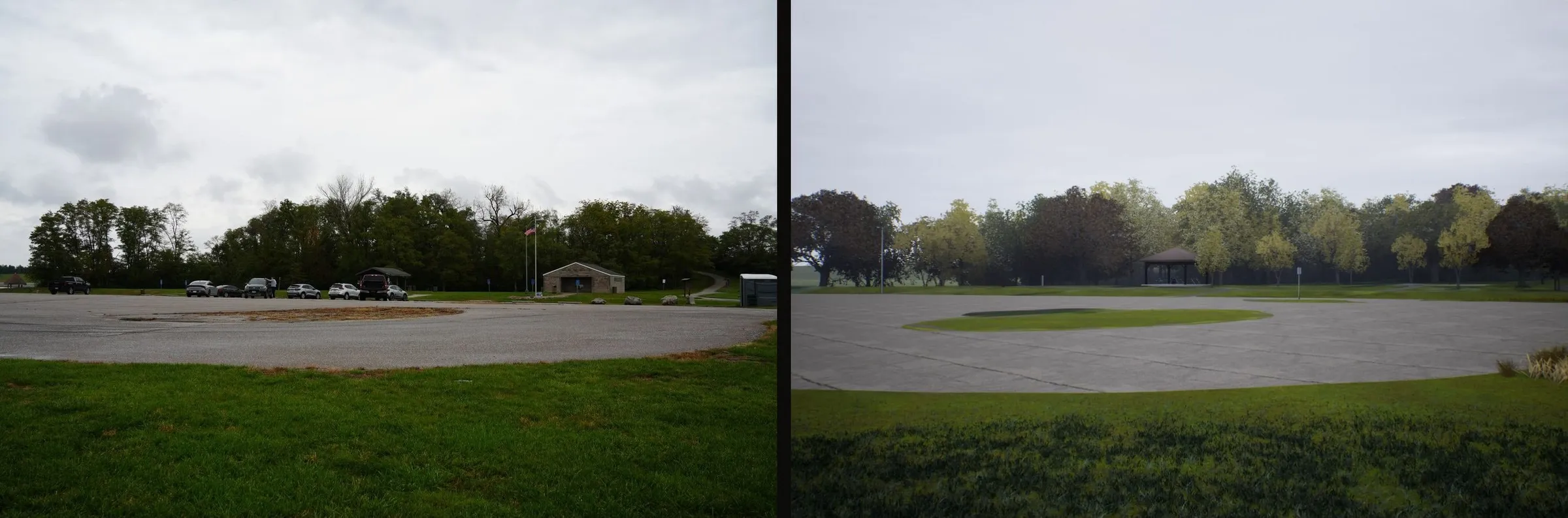
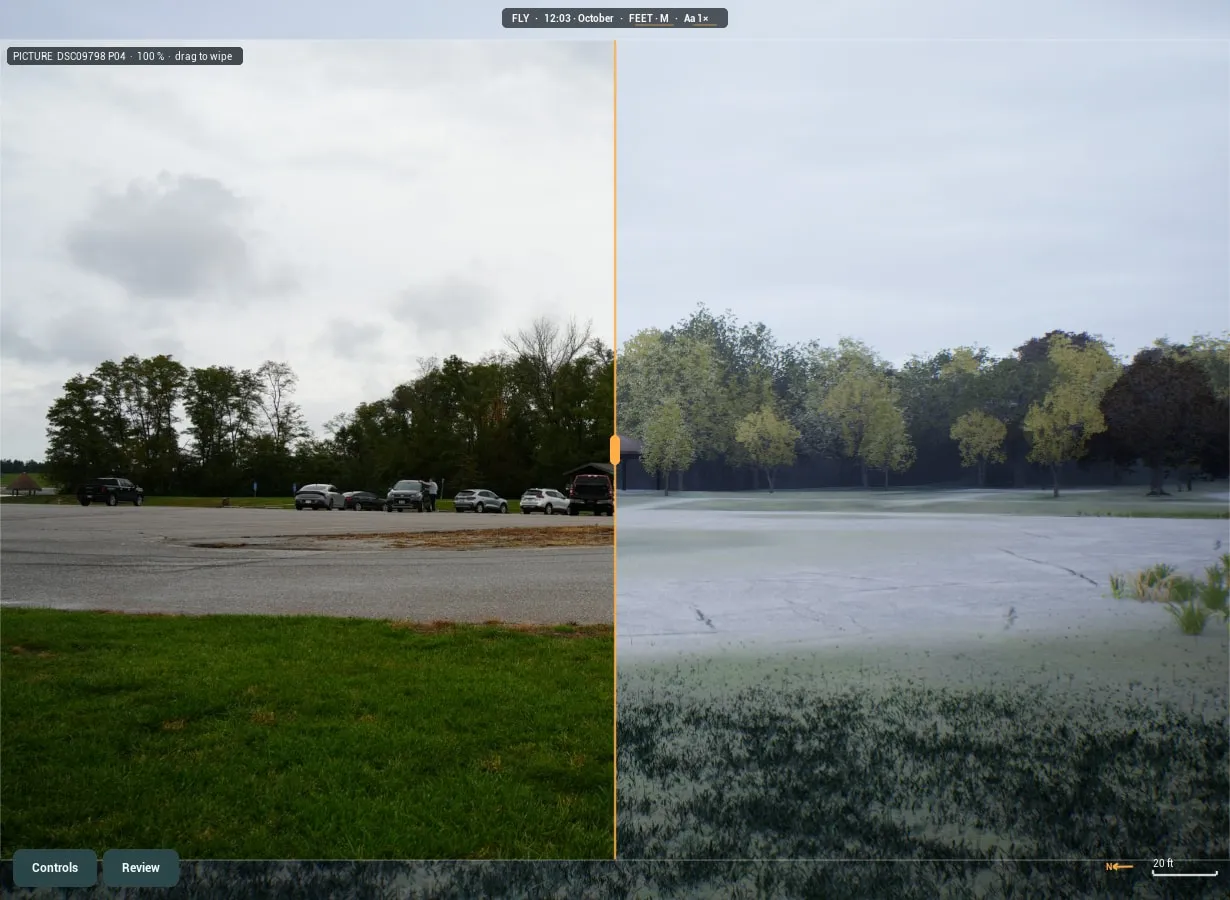
I photographed the park on the morning of 31 October 2026. 258 of the 328 photographs got a matched camera in the model; 6 of them are refined so far, against a target of 40. The viewer can wipe between a photograph and the model from the same camera.
08
How the agents are run
01
The tooling lives in four repositories on GitHub. The engine alone has 504 commits in five weeks, from 11 October to 15 November 2026, and 419 of them carry an AI co-author line. The sessions were Claude models, with ChatGPT/Codex as the builder for four blocks before 7 November. Before any work, an agent reads a fixed set of start files: the engine's rules, the map of the part it is working in, which links that part's contracts, and my general working agreements. There are 19 contracts, 14 of them for the spatial pipeline. Three of the rules: "Proof before claims. A still you looked at, a number from a log, a hash. If a check could not run, say so." "Push or publish only when Josh authorizes it." "Decide and go. When a choice is Josh's but he is away, take the recommendation written in the brief … record the decision in your log under 'Decisions for Josh', and continue." Work is cut into blocks. One session orchestrates: it writes a brief, hands it to a single worker session, checks what comes back and keeps the log. In the park's log, 29 blocks ran this way, between 7 and 15 November 2026, with a pause from the evening of 7 November to 13 November. 60 briefs are on file, some from earlier blocks. Nothing counts until it is checked. The engine's automated check has 70 numbered sections, covering things like hand work surviving every scene sync, parts within ±2 mm of their declared bounds, and a license gate that blocks any asset that is not CC0, public domain or owned until its license is cleared. Then the orchestrator opens the final stills at full size and looks. Its notes include "Not as reported: stills/after/ac-gulls.png shows no gull." One check exists because of a failure. On 23 October 2026 an index run on one folder shrank the library's id table from 4,662 assets to 55. It was recovered from sidecars, and guards were added so that "a table that falls below half its last size is refused." That guard is check section 57. I keep the decisions: the order of work, licenses, deletions and every push to GitHub. Since 13 November 2026, on my word, a block may delete its own superseded attempts. It is not tidy. During the 29 park blocks the engine's full check was not run per block, and its latest recorded full quick run, on 22 and 23 October, had 352 passed and 3 failed. Workers' reports were wrong more than once; those errors are caught only because the orchestrator re-checks the reports. 15 of the 29 block headings say "LANDED" rather than "COMPLETE", and one more says "COMPLETE with open items". And it all runs on one machine, one heavy job at a time.
09
What is not done
Clicking through to Layer is not set up on the park model, and sending notes to Layer has only run as a dry run. Only 6 of the 40 target cameras are refined. The camera moves ease to a stop between tour legs, and the time of day changes in half-hour steps; smooth versions need engine work. The houses are massed by rule from lidar over OpenStreetMap footprints, not surveyed. The tree species are illustrative. The data is visualization grade, from public sources. It is not a survey. What I want to find out next is how this holds up on a live project, with a real team's models and deadlines.